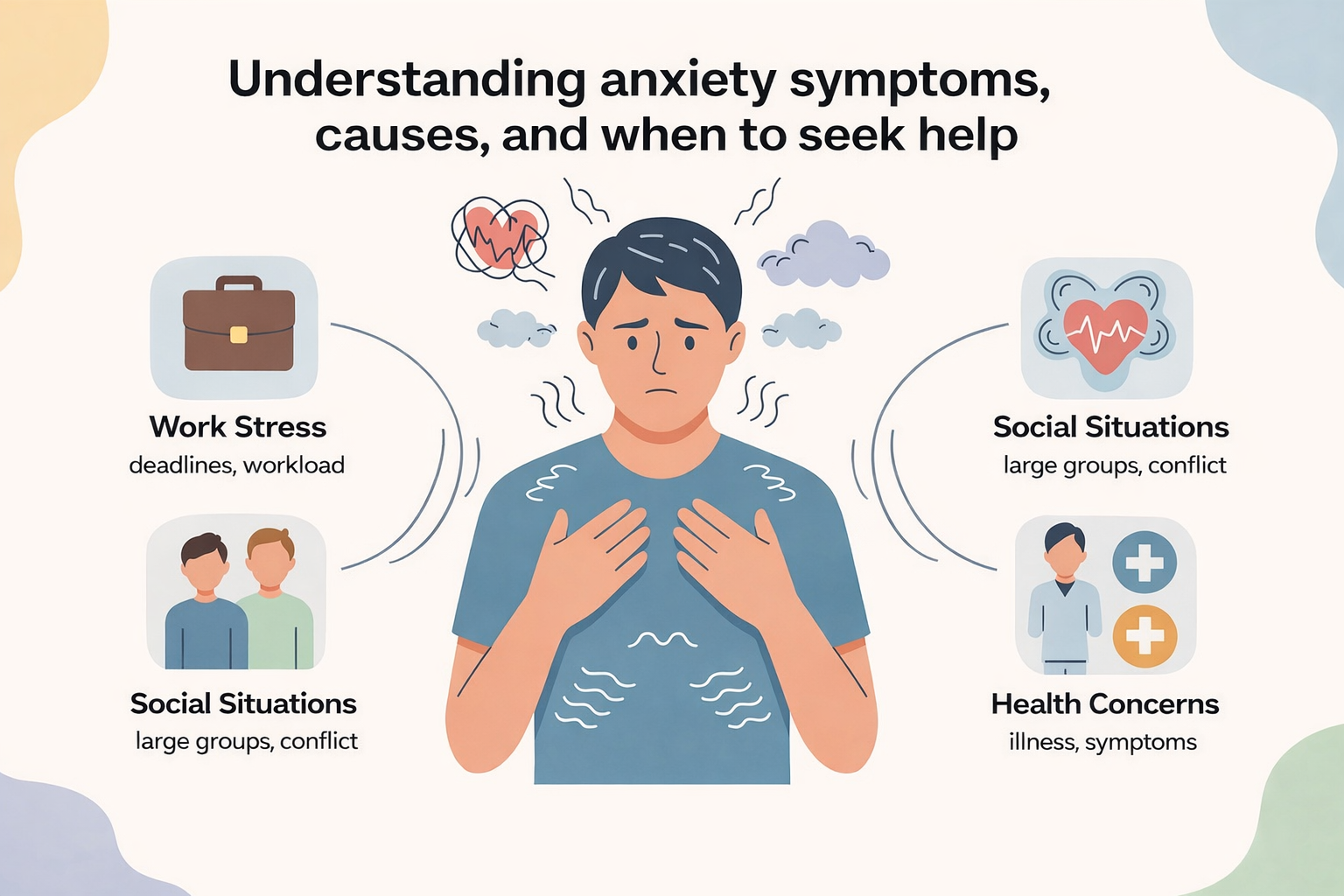


Anxiety is more than occasional worry—it’s a heightened state of alert that can affect thoughts, emotions, and physical health. While many of us experience stress, persistent anxiety that interferes with daily life deserves attention.
Recognising the Less Obvious Symptoms
Beyond the classic signs like nervousness or restlessness, anxiety can also show up in ways people often overlook:
Decision paralysis: Difficulty making even small choices due to fear of outcomes
Perfectionism and over-preparation: Constantly trying to “control” situations
Digestive disturbances: Stomach cramps or nausea triggered by worry
Sleep cycle disruption: Not just insomnia, but inconsistent sleep patterns
Noticing these subtle signs can help you address anxiety before it becomes overwhelming.
Understanding the Underlying Causes
Anxiety often arises from a combination of factors:
Biological predisposition: Genetics or chemical imbalances in the brain
Environmental triggers: Stressful life events, pressure at work or studies, or traumatic experiences
Cognitive patterns: Overthinking, catastrophizing, or heightened self-criticism
Lifestyle influences: Irregular sleep, poor nutrition, and excessive digital consumption
Recognising triggers is key to managing anxiety effectively.
Case Study: Emma Stone
Oscar-winning actress Emma Stone has openly spoken about struggling with severe anxiety since childhood. She described panic attacks, social anxiety, and the constant pressure to perform. By seeking therapy, practising mindfulness, and developing coping strategies, she gradually learned to manage her anxiety and thrive in both her personal and professional life.
Her journey highlights that anxiety can affect anyone—even highly successful people—and that therapy provides real, sustainable support.
When to Seek Help
Consider professional support if anxiety:
Interferes with work, studies, or relationships
Persists for weeks or months
Causes panic attacks or physical symptoms
Prevents you from enjoying daily life
Therapy, counselling, and lifestyle adjustments can help you regain control, build resilience, and restore balance.
How Unmute Minds Can Support You
At Unmute Minds, psychologist Aarti Sahni provides personalised anxiety counselling using evidence-based methods like CBT, mindfulness, and relaxation techniques. The focus is on identifying triggers, developing coping strategies, and supporting lasting emotional well-being.
Anxiety is a signal, not a weakness. Taking the first step toward help is an act of courage—and it can open the door to a calmer, more confident life.
Book a session today with Aarti Sahni at Unmute Minds and start your journey toward managing anxiety effectively.